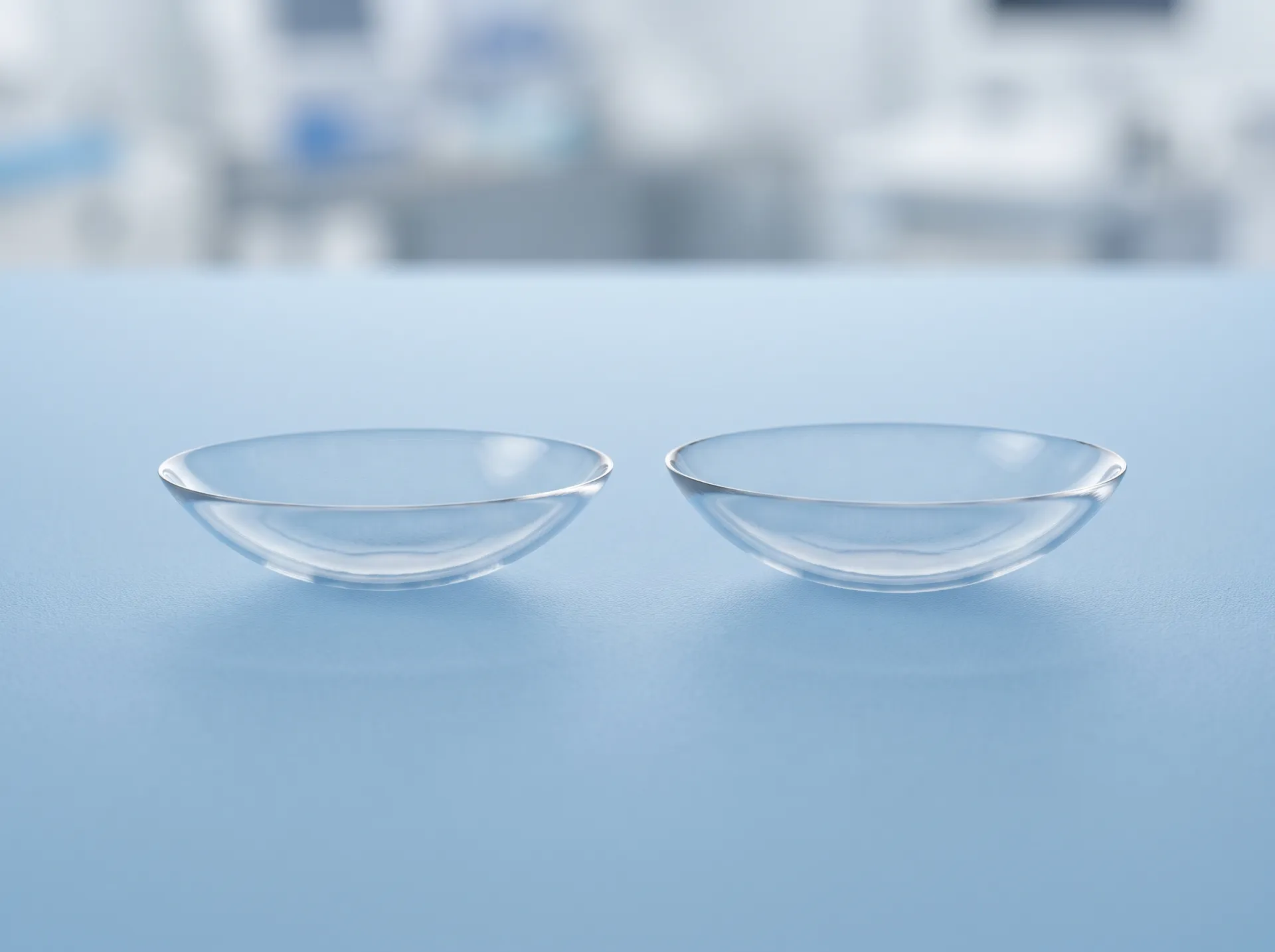
PROSE Devices vs. Advanced Scleral Lenses: A Patient's Guide
PROSE (Prosthetic Replacement of the Ocular Surface Ecosystem) is a custom scleral device made by BostonSight for severe ocular surface disease. These devices vault over the cornea and rest on the sclera, creating a fluid reservoir that continuously bathes and protects the ocular surface. For most keratoconus patients, modern advanced custom scleral lenses achieve equivalent optical and therapeutic results — fitted locally, at lower cost, without traveling to a PROSE center.
Medically Reviewed by Dr. Alexander Bonakdar, O.D.
What Is a PROSE Device?
PROSE stands for Prosthetic Replacement of the Ocular Surface Ecosystem. Developed by BostonSight, it is a custom-manufactured, large-diameter gas-permeable device that vaults completely over the cornea without touching it.
The space between the device and the cornea is filled with preservative-free saline, creating a fluid reservoir that continuously bathes and protects the ocular surface. This makes PROSE devices particularly effective for patients with severe ocular surface disease where the corneal surface is compromised.
PROSE devices are lathed in-house at BostonSight facilities using proprietary design software, allowing extreme customization for the most complex cases.
Key Features
- Vault design:Completely bridges over the cornea — no corneal contact
- Fluid reservoir:Continuous saline bath protects and hydrates the ocular surface
- Gas permeable:Allows oxygen transmission to maintain corneal health
- Prosthetic function:Replaces the damaged ocular surface ecosystem
Who Needs PROSE-Level Care?
PROSE devices are designed for severe ocular surface disease that has not responded to conventional treatments. These conditions include:
Corneal Stem Cell Deficiency
Neurotrophic (Anesthetic) Corneas
Severe Dry Eye and Autoimmune
Corneal Exposure and Other
PROSE vs Scleral vs Hybrid vs Corneal RGP
| Feature | PROSE | Custom Scleral | Hybrid | Corneal RGP |
|---|---|---|---|---|
| Best for | Severe OSD, last-line | Keratoconus, moderate OSD | Mild-moderate KC | Mild KC |
| Fluid reservoir | Yes | Yes | No | No |
| Customization | Extreme (in-house lathing) | High (free-form design) | Moderate | Standard |
| Where fitted | BostonSight network only | Any scleral lens specialist | Most optometrists | Most optometrists |
| Insurance | Case-by-case; Medicare only under NCD 80.5 | Medical benefit for KC | Usually vision benefit | Usually vision benefit |
Custom scleral lenses at Keratoconus Vision Center are one global fee per eye, quoted at your evaluation, covering the fitting, corneal imaging, trial lenses, the final custom lenses, and all follow-up visits. We accept VSP and EyeMed vision plans, and all PPO plans are accepted. We verify your benefits for you before your visit, at no charge. See our scleral lens cost guide for the full breakdown.
Need Advanced Scleral Lens Care in Orange County?
Most keratoconus patients achieve excellent results with custom scleral lenses fitted locally. Same-week evaluation available.
When to Consider a PROSE Center
PROSE devices are appropriate when severe ocular surface disease has not responded to conventional scleral lenses and other treatments. If you have Stevens-Johnson syndrome, severe GVHD, or chemical burns with extensive ocular surface damage, a BostonSight network center may be the right next step.
For more information about BostonSight and their provider network, visit bostonsight.org.
When Advanced Sclerals Are Equivalent
For most patients with keratoconus, corneal ectasia, and moderate ocular surface disease, modern custom scleral lenses achieve the same optical and therapeutic results as PROSE — at a fraction of the cost and without requiring travel to a specialized center.
- ✓ Keratoconus at any stage
- ✓ Post-LASIK or post-RK ectasia
- ✓ Post-corneal transplant irregular astigmatism
- ✓ Moderate dry eye and ocular surface disease
- ✓ Pellucid marginal degeneration
Insurance Coverage
PROSE Insurance
Medicare covers PROSE only under narrow NCD 80.5 criteria when the device is classified as a prosthetic. Commercial insurance coverage is case-by-case and often requires extensive prior authorization and documentation.
Custom Scleral Insurance
Some medical plans cover custom scleral lenses for keratoconus under the medical benefit (HCPCS V2531). Coverage is more straightforward than PROSE.
See our complete insurance coverage guide →Related guides: BostonSight SCLERAL — fitted locally · all scleral lens brands compared · scleral lenses for OSD
Insurance Plans We Accept
We work with most major vision and medical insurance providers to maximize your benefits.
Vision Plans
- VSP (Vision Service Plan)
- EyeMed
- Davis Vision
- Spectera
- Superior Vision
- Avesis
Medical Plans
- Medicare
- Blue Shield of California
- Anthem Blue Cross
- United Healthcare
- Cigna
- Aetna
- Tricare
*Medical insurance is often used for medically necessary contact lenses.
CareCredit Financing
Make keratoconus treatment affordable with CareCredit. We offer 0% interest financing for 6- and 12-month plans on scleral lens fittings and other treatments. Apply in minutes — no impact to your credit score to check eligibility.
Schedule a Scleral Lens Consultation
Find out if advanced custom scleral lenses can provide the vision and comfort you need — without traveling to a PROSE center.
Or call: (949) 693-4900
Schedule Your Expert Consultation
Fill out the form and our team will reach out within 1 business day.
Last reviewed July 2026 by Dr. Alexander Bonakdar, OD
Lost or Broken Scleral Lens? Same-Day Help Available
Emergency scleral lens dispensing for keratoconus patients
If your scleral lens is lost, cracked, or damaged, you may be functionally unable to see. We understand the urgency. Dr. Alexander Bonakdar keeps diagnostic and loaner scleral lenses on-site and can often restore functional vision the same day while your custom replacement is being fabricated.
Emergency Scleral Lens Care & Insurance
- Office-hours and after-hours emergency care available — We accept VSP and EyeMed vision plans, and all PPO plans are accepted. We verify your benefits for you before your visit, at no charge.
- Free scleral lens starter kit — plunger, lens case and solution, plus insertion and removal training at no extra charge.
If your lens is cracked but still wearable, stop wearing it — a damaged edge can scratch the cornea and turn a lens replacement into a corneal injury.
Call Now: (949) 693-4900